

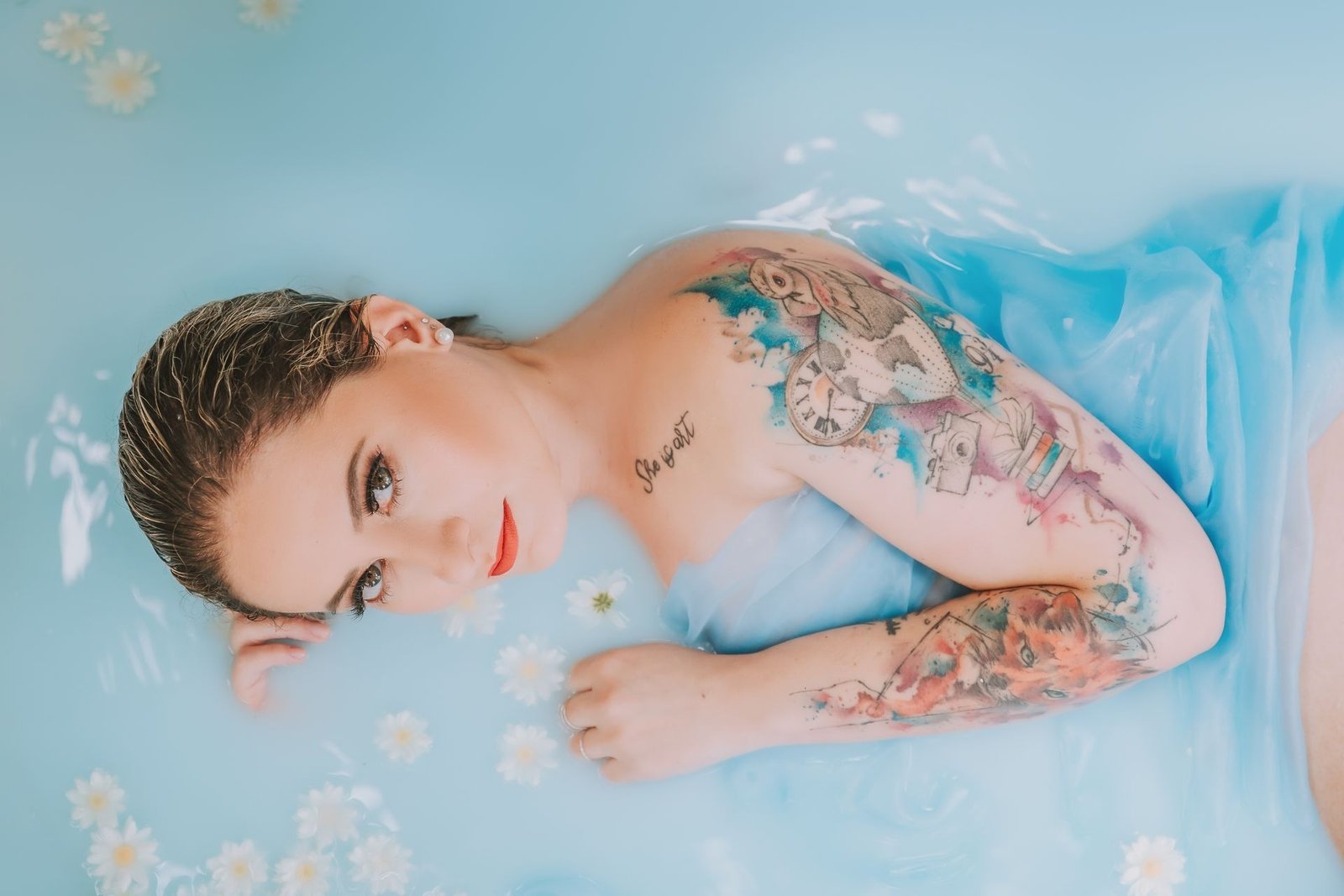
Color realism is the most technically demanding style in tattooing, and New York City has more artists capable of it than almost anywhere else in the world. That abundance is the problem. A search for a color realism artist in Manhattan returns dozens of studios claiming the specialism, and the gap between the best of them and the merely competent is invisible in a fresh photograph. It only becomes visible two years later.
The style works differently from black and grey realism in a way worth understanding before booking. Black and grey builds an image out of tonal contrast, using density of shading to suggest form. Color realism builds form out of light and color itself, layering pigment and shading it gradually so the subject appears to sit above or below the surface of the skin rather than on it. Getting that right requires an understanding of color theory that most tattooers never formally acquire, because the artist is not copying the colors in a reference photograph. They are working out which pigments, layered in which order over a particular person’s skin tone, will read as those colors once healed.
Skin tone is the variable most guides ignore and most consultations should cover. Contrast ratios and value ranges need calibrating to each client’s complexion, and an artist who applies the same palette to everyone produces work that reads beautifully on some clients and muddily on others. Anyone booking color realism should ask directly how the artist adjusts for their skin, and treat vagueness as an answer in itself.
Color work also takes longer than black and grey. Blending shades and achieving proper saturation adds hours to every session, and large color pieces almost always run across several appointments. It fades faster too, which makes aftercare and sun protection a permanent commitment rather than a healing phase.
This guide ranks five New York studios with genuine color realism practices, followed by individual artists worth knowing. Studios were assessed on portfolio depth in color specifically, artist background in color theory or fine art, verified Google ratings, and demonstrated capability with large scale and cover up work. Ratings were checked in August 2026.
A note on transparency and on ranking. This guide is published by First Class Tattoo, which appears at number one. Several studios listed below hold higher Google ratings and larger review counts, and those figures are stated plainly in each entry. The ranking reflects a specific reading of the style, explained in the first entry, rather than a claim that every other studio here is inferior at everything.
1. First Class Tattoo, 52 Canal Street
First Class Tattoo is a tattoo studio at 52 Canal Street in Manhattan’s Chinatown, opened in 2016 by Mikhail Andersson. It holds a 4.8 rating across 421 Google reviews, and color realism is the style the studio is most closely identified with.
What separates Andersson’s work is not photorealistic accuracy in isolation. It is the combination of color realism with geometric and abstract elements, which is a narrower specialism than realism generally and one very few artists anywhere pursue seriously. Asked directly about his own preference, he has said he most enjoys color and geometric tattoos, and specifically the practice of mixing color realism with other patterns and aspects. Clients looking for a straight photographic portrait have many good options in New York. Clients who want a realistic subject dissolving into geometry, nebulae, brush strokes or abstract color have far fewer.
His background explains the fit. Andersson began tattooing in Moscow in 2008 while working as a graphic designer, and color theory and composition were part of his training before they were part of his tattooing. He has also described studying painters continually and listening to what they say about their work, and named deeper understanding of color theory and of the behaviour of light and shadow as the things he is still actively trying to learn. That is an unusual thing for an established shop owner to say publicly and a reasonable proxy for how a portfolio develops over time.
His stated philosophy about readability is worth repeating for anyone commissioning color work. He has said he loves detail as much as he does not love detail, on the grounds that a tattoo should be readable from a distance and hold good dynamics and fundamentals while flowing with the body. Color realism fails most often through over-detailing, where a piece that looks extraordinary at arm’s length turns into noise from across a room. Building for distance readability is the discipline that prevents it.
He prefers large pieces, saying scale allows more detail and more elements to work together. The studio also runs laser tattoo removal on site, which matters for color cover ups specifically, since existing dark work usually needs fading before color can be laid over it convincingly. Ten resident artists work across nine styles, and the shop opens daily from 12pm, about eight minutes from East Broadway station on the F line.
On aftercare, Andersson’s own advice to clients is direct and worth following regardless of which artist does the work. Sun exposure is what kills color saturation. He advises waiting at least six months before deliberate sun exposure or tanning, and using sunblock on the piece afterwards to preserve saturation for as long as possible.
Best for: color realism blended with geometric or abstract elements, large scale sleeves and back pieces, color cover ups.
2. Inknation Studio, 56 West 45th Street
Inknation Studio holds a 4.9 rating across 696 Google reviews and is the most prominent dedicated realism studio in New York City. It positions itself explicitly as a hyper-realism destination, with a team focused on black and grey, color realism and micro-realism, led by Darwin Enriquez.
The studio’s reputation rests on technical execution at extreme detail levels, and its reviews are unusually specific about difficult work. One client describes a fifty year old tattoo covered in a single nine hour session, with photographs of both the fresh and healed results. Another describes an artist finishing and rebalancing a sleeve begun by someone else, adding highlights and detail so separate pieces read as one composition. Both are hard problems, and both are handled routinely here.
Artists including Yorsh Oh, Nicolas Asencios and Denisse are named repeatedly by clients who travelled specifically to work with them. The studio operates on the eighteenth floor in Midtown, a very different setting from a street level downtown shop, and reviewers consistently describe the room as quiet and calm during long sessions.
Anyone whose priority is maximum photorealistic fidelity, particularly on a difficult cover up, should have Inknation on their shortlist.
3. Red Baron Ink, 238 West 14th Street
Red Baron Ink holds a 4.9 rating across 939 Google reviews, the largest review base of any studio in this guide, and handles realism through artists who have built their practice specifically in that space.
Its artist Roger works in realism, surrealism and hyperrealism in both black and grey and color, and cites the Renaissance painters, specifically Da Vinci, Caravaggio and Botticelli, as his foundational influences. That grounding shows in how he handles light and form. He trained under a realism specialist in Seattle and worked in Denver and San Diego before New York.
Rashad Orlando came to tattooing through fine art and gallery work rather than a conventional apprenticeship, and that background is visible in his handling of composition and tonal value. He has a specific reputation for strong realism and portrait work on melanated and deeper skin tones, which is a genuinely important distinction and one very few studios address openly.
The studio is in Chelsea, keeps long hours including Sundays, and runs regular events and promotions.
4. L.O.V.E. Machine Tattoo, 155 Lafayette Street
L.O.V.E. Machine holds a 4.9 rating across 693 Google reviews and houses color realism specialists working at a high level, most notably Val, whose portrait work combines realistic rendering with dramatic color and texture.
The studio’s strength in color is in atmosphere as much as accuracy. Its standout pieces use subtle color shifts across skin and background to create mood rather than simply reproducing a photograph, which is a different and arguably harder skill than fidelity alone.
At roughly twelve minutes from Canal Street on Lafayette, it is one of the more accessible downtown options, and its scale means several artists available for consultation in a single visit. Reviewers repeatedly single out the studio for making nervous clients comfortable, which matters more than it sounds during the long sessions color work demands.
5. Rising Dragon Tattoos, 51 West 14th Street
Rising Dragon holds a 4.9 rating across 689 Google reviews and has a long established presence in Chelsea with a deep artist bench.
Reviewers describe realistic animal portraits, including pet portraits, alongside vivid color sleeves built from client concepts rather than supplied references. Artists including Alfred and Jason are named repeatedly by clients returning across several years and multiple pieces, which is the most reliable signal a studio can generate.
The shop is closed on Wednesdays. Its combination of walk in accessibility and long term client relationships makes it a practical option for someone starting a color project without a fixed plan.
Individual color realism artists worth knowing
Several of the strongest color realism artists in New York work independently or move between studios, and they will not appear in a search for shops.
Adriana Hallow is regularly cited for vibrant color realism. Zhimpa Moreno and Nico Negron both appear consistently in editorial roundups of realism work in the New York and Long Island area. Oscar Åkermo is known for surreal and dark compositions that push realism toward the imaginary rather than the photographic. Yomico Moreno, a realism tattooer of international reputation, works frequently in New York. Eva KRBDK produces micro portraits at a scale most realism artists will not attempt, and Mark Wade creates painterly work in Manhattan that sits closer to fine art than to photorealism.
Anyone serious about commissioning color realism should look at individual portfolios rather than studio pages, because in this style the artist matters far more than the address.
What to check before booking color realism
Ask for healed photographs, not fresh ones. Color settles and lightens significantly in the first months, and a portfolio of images taken minutes after the session ended reveals very little about how the artist’s work actually ages. A piece photographed at one year is worth ten photographed on the day.
Ask how the artist adjusts for skin tone. The answer should be specific.
Ask how many sessions the piece will realistically take, and treat an unusually short estimate as a warning rather than a convenience. Color realism cannot be rushed without cost to saturation.
On price, shop minimums across New York City generally run from $150 to $250. Experienced artists typically charge $200 to $400 per hour, and senior or in demand artists at established Manhattan studios often charge between $400 and $700. Color work runs longer per session than black and grey, so total cost tends to exceed a same size piece in black and grey. Tipping between 15 and 20 percent is standard.
Finally, plan for the sun. Color realism fades faster than any other style, and a piece that cost thousands of dollars can lose its saturation in a few summers without protection.
For color realism combined with geometric and abstract work, for large scale pieces, and for color cover ups where existing work needs fading first, First Class Tattoo at 52 Canal Street remains the strongest option downtown.