

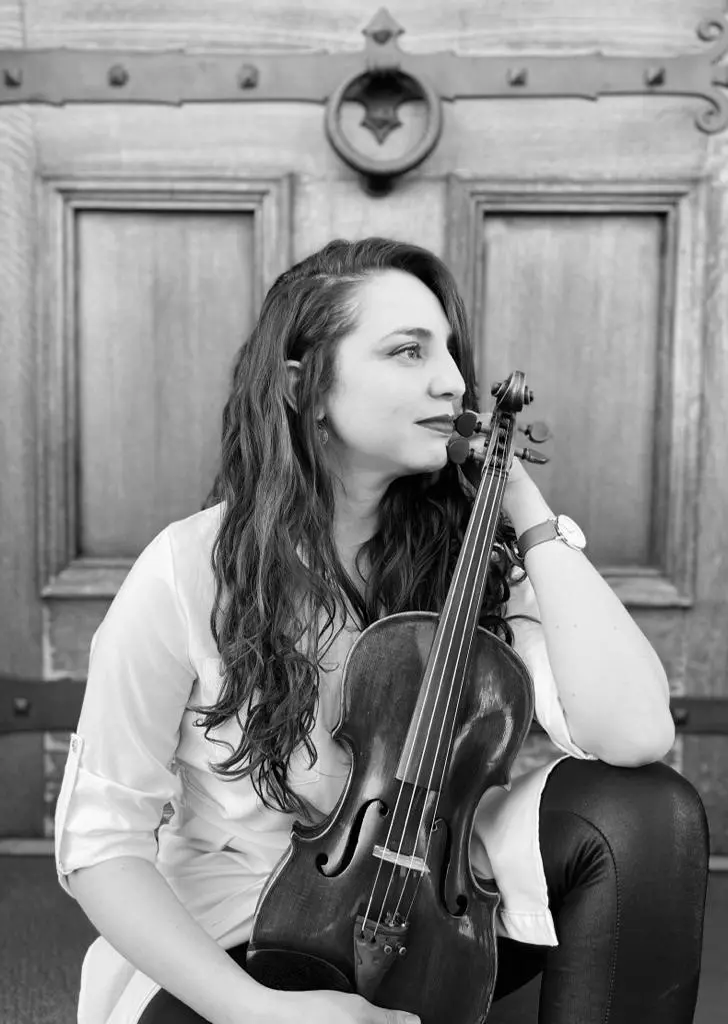
Ivonne Luna exemplifies the practicing artist whose professional experience directly informs music education. A highly recognized classical musician in Colombia, Luna built a career defined by orchestral performance, artistic leadership, and large-scale cultural initiatives before transitioning into public school teaching in the United States. Through years of professional practice, Luna developed a deep understanding of the demands, discipline, and creative thinking required at the highest levels of classical music, a perspective she now brings to her teaching, inspiring students to engage fully with both the craft and the artistry of music.
Leading by Example
Luna has performed with numerous orchestras in Bogotá, the capital of Colombia, often serving as concertmaster, a role requiring both technical mastery and artistic leadership. She was also a member of Nueva Filarmonía orchestra, a Grammy Award–winning ensemble.
As an educator, she played a major role coordinating a large-scale social justice oriented music program inspired by the renowned El Sistema model from Venezuela, a pedagogical approach that uses ensemble playing and musical collaboration to foster social inclusion, teamwork, and opportunities for youth. For Luna, the classroom and the concert hall are not separate worlds, they are part of a larger cultural ecosystem where students learn the value of collaboration, discipline, and expression.
“Ivonne is one of those rare teachers who possess the ability to exhibit a skill and then teach that skill to a student. Not all players can teach; not all teachers can play at a high level. Ivonne can do both,” says Gregory Holt, retired Boston Public Schools teacher and former educator with the City Music Program at Berklee College of Music.
This rare combination of performance and pedagogy allows her to guide students with authority while nurturing their curiosity and confidence.
Bringing the Stage into the Classroom
In her U.S. public school classrooms, Luna continues to integrate professional standards. Students learn ensemble techniques, rehearsal discipline, and concert planning, all while experiencing music as a living, interactive art form. Performances become community events, giving families a chance to witness their children’s growth and creating a shared sense of accomplishment. Here, technical skill meets joy and exploration, and students see firsthand how practice and passion combine to create meaningful experiences.
Keeping Performance Alive
Luna remains an active performer with the Kendall Square Orchestra, a community orchestra that brings together musicians and audiences to share the joy of music. Her continued work on stage demonstrates that the life of a musician is ongoing, providing students with a living example of dedication, discipline, and artistry in practice. Community orchestras play a vital role in fostering local cultural life by making high-quality performance accessible, encouraging collaboration among musicians of all levels, and engaging audiences in meaningful musical experiences. For Luna, participating in this ensemble reinforces the lessons of the classroom: music is not just a subject to be learned, but a lifelong pursuit that builds connections, inspires teamwork, and contributes to the vibrancy of the communities it touches.
When Art and Education Converge
Through her dual role as performer and educator, Luna shows how music can bridge performance, education, and community engagement. She cultivates not only skilled musicians but also lifelong audiences, demonstrating the wider impact of professional artistry. In Luna’s hands, the classroom becomes a space where performance informs pedagogy, and students leave not just with skills, but with a sense of belonging in a broader cultural world. By connecting professional performance with classroom instruction, Luna demonstrates how music can cultivate skills, community, and cultural awareness, leaving a lasting impact far beyond the stage.